
Every Day Is Different
Guiding, studying and watching the season change
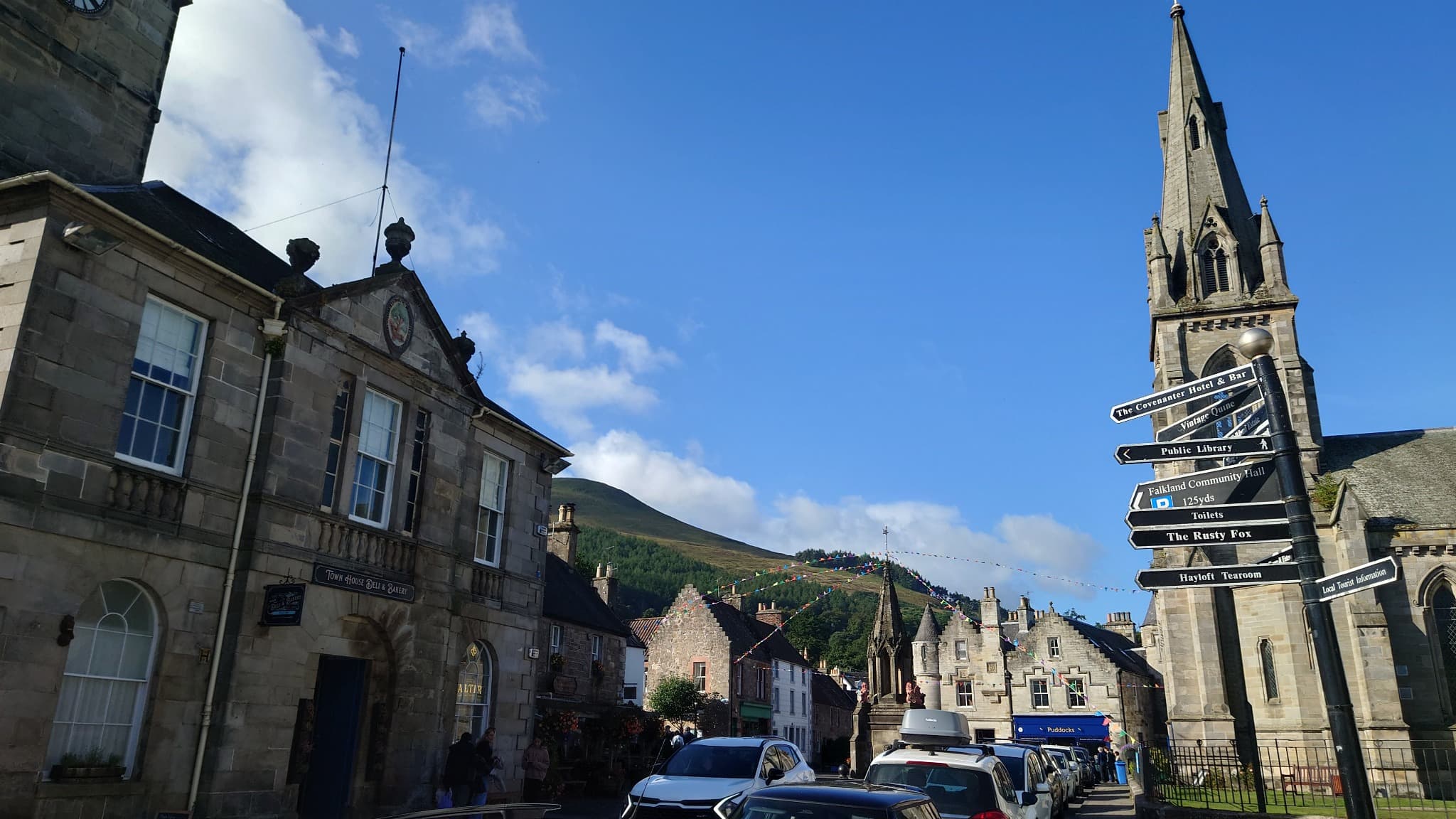
Falkland, Fife
Autumn has arrived.
The trees are the most visual giveaway, but when you are guiding you notice it in practical ways too. Another layer of clothing gets added before a walking tour. First thing in the morning, the wind feels colder when you are standing near the sea waiting for a cruise party arriving at the port, and sunlight has started to fade a little earlier at the end of the day.
It has been a busy time.
Plenty of thought has gone into Map & Compass, the Highlights and the idea of looking north, east, south and west from a place rather than simply presenting visitors with a fixed set of options or a fixed itinerary.
Through customer and colleague feedback this approach is evolving quickly.
Some of the best learning has come from my private guiding in the city. Those outings are never quite the same. Almost every one has had a different start or finish, and the needs of my guests are different as well.
Within the first few minutes of a tour you can find that somebody is interested in architecture, family history, politics, sport, religion or something you had not expected at all. That can change where you take the conversation next, which story you bring forward and sometimes the direction you take through a familiar part of the city.
You have to listen early.
Changing the order of things can change the feel of a walk as well. A story that normally comes later can sometimes make more sense at the beginning. Approaching a familiar place from another part of the city can make you spot something altogether different. Even for a guide it can be as revealing as visiting the same place for the very first time, over and over again.
It’s the part of Map & Compass that really matters. It can help somebody find the things that interest them, but it doesn’t determine the day before the people have arrived.
Studying Fife and Angus
The course has ramped back up, and the Fife and Angus region is a pleasure to study.
Falkland in particular is one of Fife’s jewels.
The Palace gives you so much to work with, especially once you start looking at how it developed over the centuries and how its use changed. The same is true of the village itself.
At peak visitor times, residents must carry some of the impact of so many people coming through such a small place. Observing that and respecting boundaries, both physical and cultural, really matters when you are guiding.
Sometimes responsible guiding is quite simple. Where does the group stand? Are you blocking a doorway or a pavement? Is there a better place to stop and tell the story? Are you remembering that somebody lives there while you are enjoying the place as a visitor?
The history matters, but so does the place as it is today.
Cupar has opened up another trail altogether.
I have been reading about two of its ‘sons’, Sir David Lindsay of the Mount and Robert Lindsay of Pitscottie. David takes you towards Ane Satyre of the Thrie Estaitis. Robert takes you towards the Chronicles of Scotland.
I need to find time to read much more about both of them.
There are coats of arms to understand, the Mount of Lindsay to get my head around and, in Robert Lindsay's case, the Scots itself.
I know that last part will be a challenge.
I am looking forward to it, although I may regret saying that once I get properly started.
St Andrews has been different again.
Over the last few weeks I have watched the town get busier with the University resuming and also the build towards the Dunhill Pro-Am. The scoreboards and viewing galleries appear, hospitality tents go up and all the preparation for a large event becomes more obvious as the month progresses.
I have enjoyed watching that happen.
I have also really enjoyed meeting some of the heritage staff around St Andrews Castle and the Cathedral. Given they spend a lot of time there, they can help you see and learn new things as they are always close to the questions people ask.
Those chats have sent me back to my own notes more than once this month.
My stories for St Andrews are rich and still developing.
I don’t think that will ever really stop.
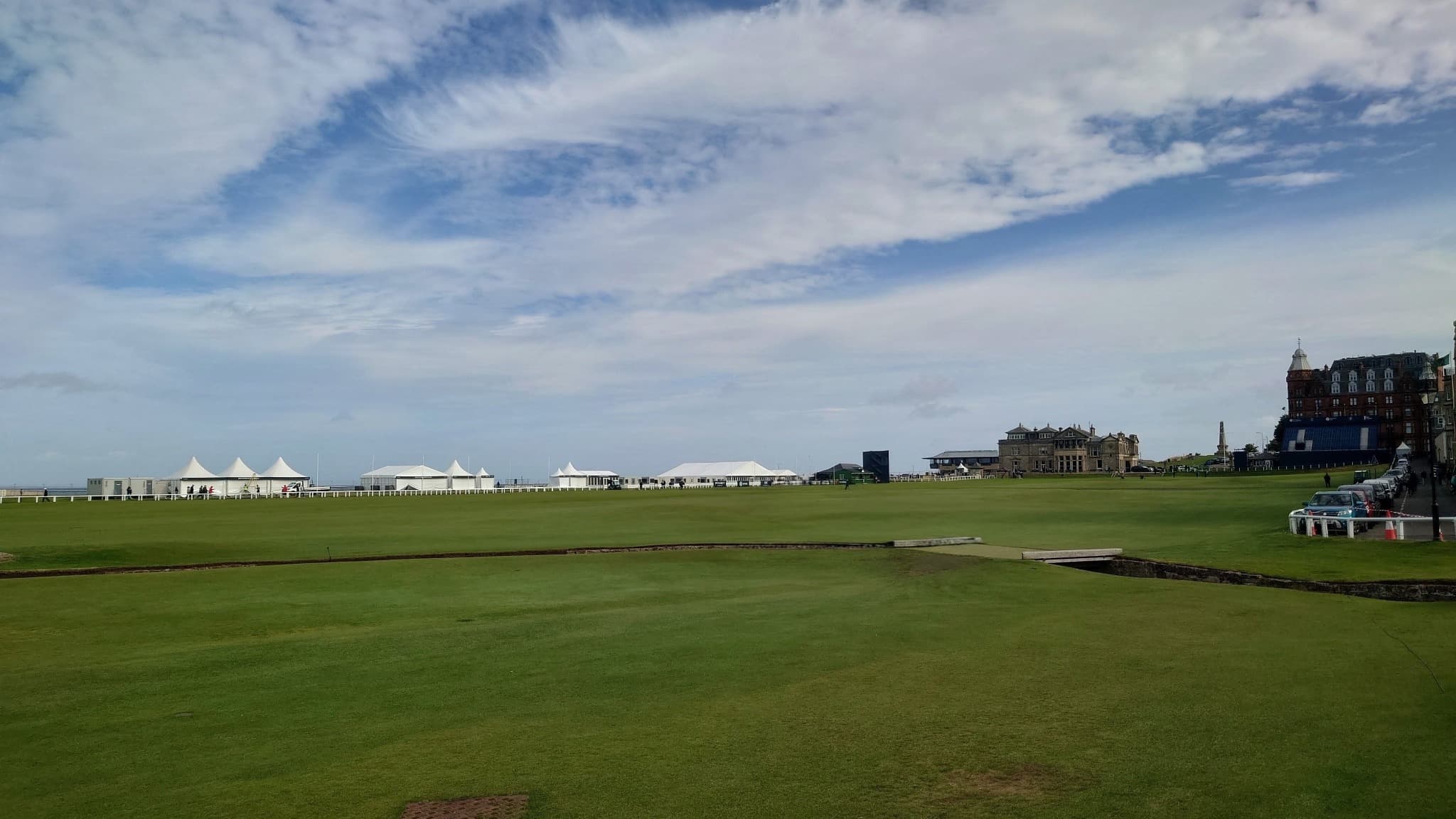
Preparations for the Dunhill Links Championship, St Andrews
Dundee, Angus and Perth
Dundee is a fascinating place. It really is.
The waterfront is the obvious place to start. The V&A, RRS Discovery, HMS Unicorn and the wider redevelopment give you a city that has changed the way it presents itself.
I recently heard John Alexander, former leader of Dundee City Council, say, ‘Be bold, be ambitious, be in Dundee.’ It must be encouraging and reassuring to hear that as a Dundee resident.
When you start looking at its history the jute story opens up.
Juteopolis is quite a word, but it makes sense when you begin to understand just how much the industry shaped the city. James Caird is one of the names that is ever present, but there is a much bigger story about employment, wealth, trade and what happens to a place when the industry that helped create it starts to shift.
Then there is what Dundee is trying to do now and next.
The Eden Project plans are a good part of that story. I see Dundee less as a city preserving its past and more as one that is continually evolving and discovering what comes next.
The Angus region is far more than seed potatoes and quality farmland too.
Sir Henry Campbell-Bannerman was the first person to receive official use of the title Prime Minister. Then there is Macbeth, which sends you off in a completely different direction.
The more I read about Macbeth, the more interesting the gap becomes between the historical king and the one most of us first meet through Shakespeare.
Shakespeare was writing after James VI of Scotland had also become James I of England, so the Scottish story had a very particular audience by then.
That is another one I want to keep digging into.
Perth has been slightly different because some of the history overlaps with my own recollections.
Bell's and Dewar's were still part of the Perth I remember growing up with. Gloag and Famous Grouse add another whisky and wine connection.
They were simply there.
It is slightly strange now to come back to the city through study and realise how much of that landscape has gone while the names have survived.
The North and South Inches, Kinnoull Hill, the Gannochy Trust, Kincarrathie Ferry and 1715 have all opened different lines of enquiry.
So has golf.
The Perth Golfing Society was founded in 1824 and received royal patronage from William IV in 1833, with Lord Kinnaird as captain. The St Andrews golfers received their own royal title the following year.
That one-year gap immediately makes me curious.
Kinnaird had a relationship with William IV. Did that have any bearing on what happened at St Andrews a year later? Was Perth's success part of the reason the St Andrews society pursued the same recognition?
Another thing to explore further and build a new story around.
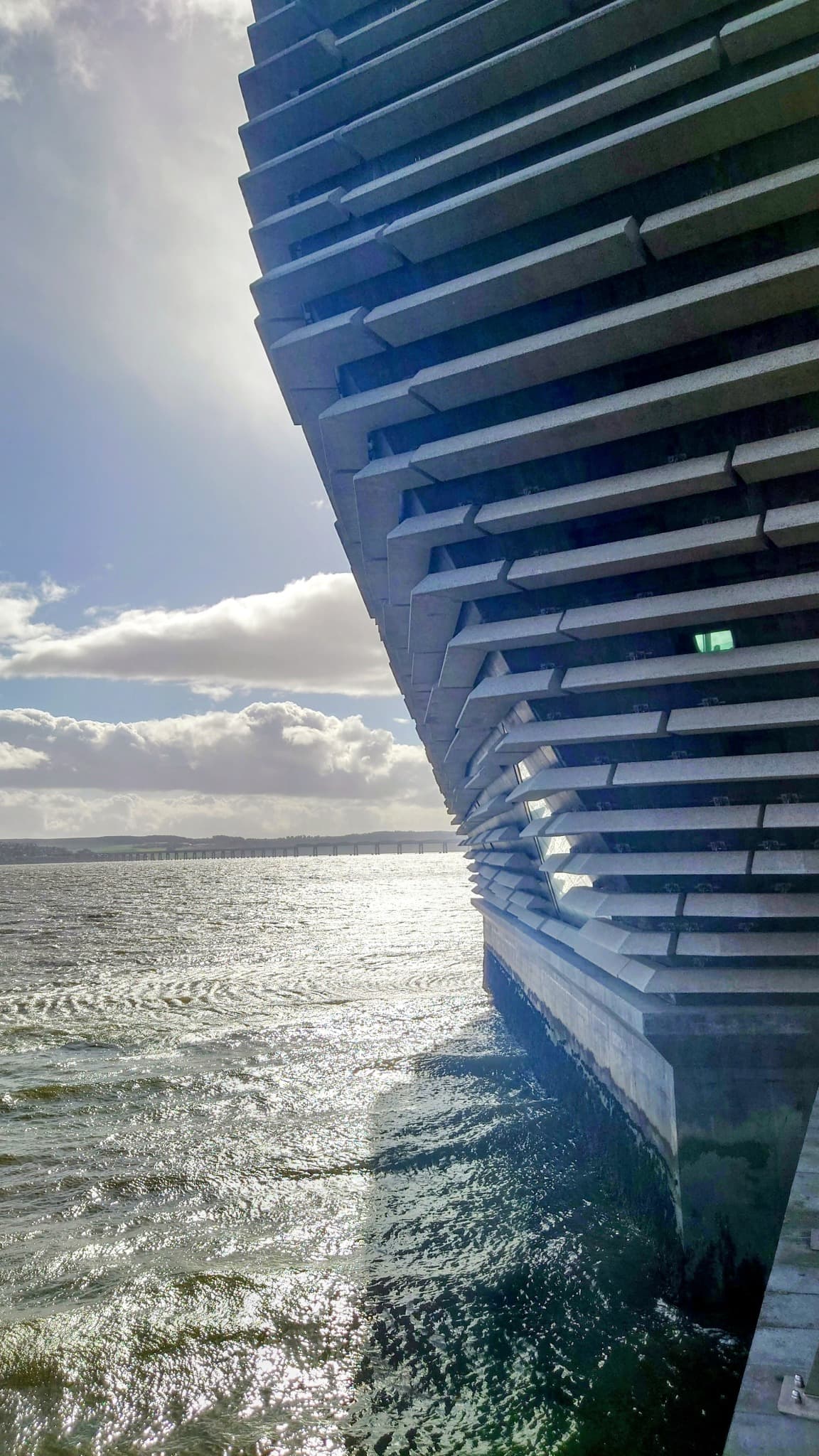
V&A Dundee and the Tay
Things that start stories
The reading material at home continues to grow, and so does the list of people I have met along the way.
Work is starting to come in for February and spring 2027, and my studies have taken me north into the Highlands and south into the Borders while I work through future tour planning.
There was another milestone this month too.
I had a significant birthday and was lucky enough to celebrate it with family, old friends and new ones.
Naturally, guiding found its way into some of the presents.
There was a Walter Scott novel, a beautiful pewter kilt pin, a tartan umbrella and a KOSB badge.
The badge was probably the most poignant and I am fairly sure that one will find its way onto my guiding gear.
It’s these little things that can kickstart stories.
A badge, a pin or even the tartan umbrella can all help to take conversations somewhere completely different. A regiment. Somebody in their family. A place they visited years ago. Something from home.
Often you end up hearing a tale or a memory you would never have heard otherwise.
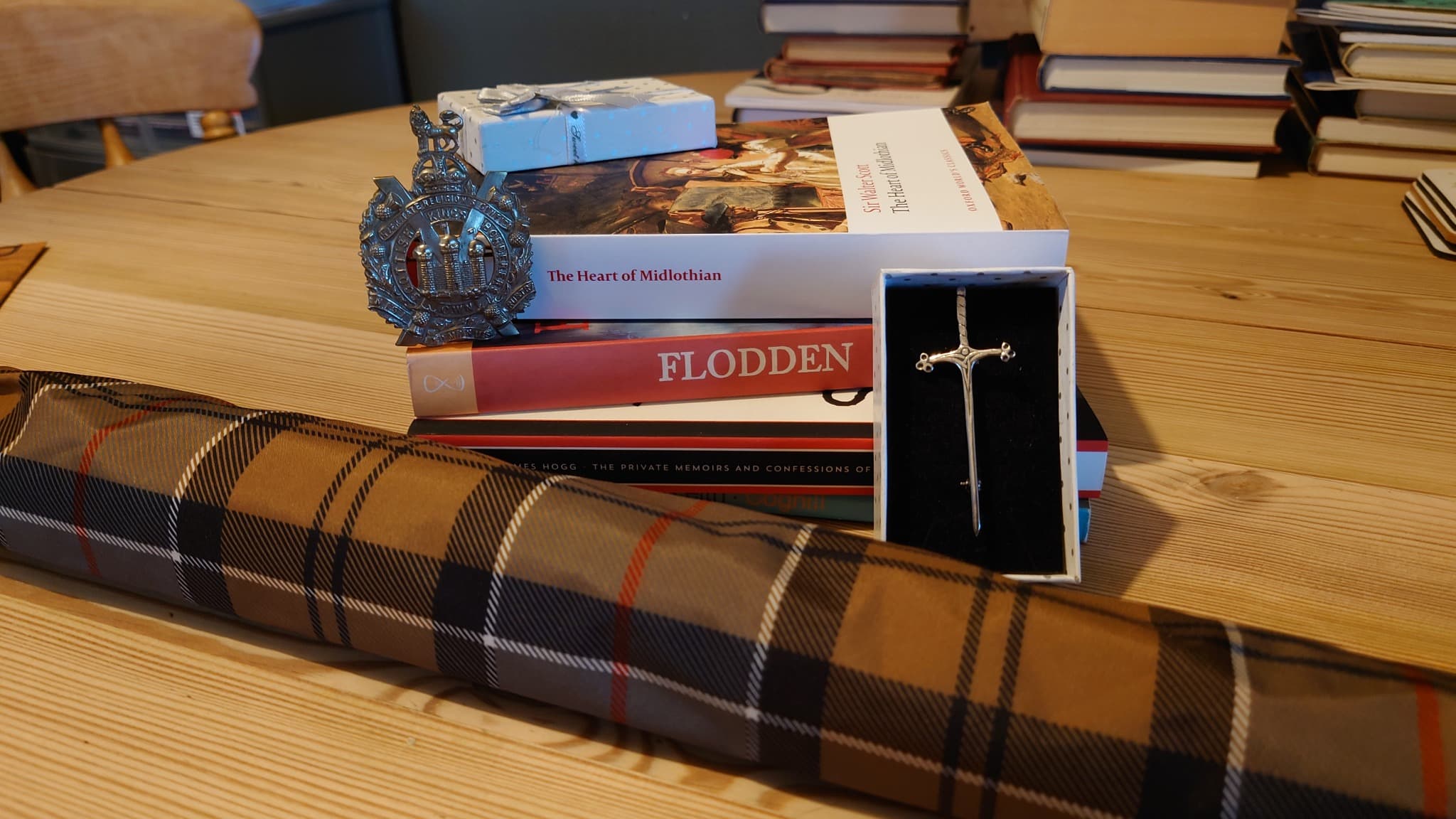
A few birthday gifts that started new stories
A season turning
The sycamores are changing now. The heathland has shifted as well, and the shorter days are making the turn in the season harder to miss.
Living here means we get to watch that change happen little by little.
Most visitors only get a snapshot.
I quite like that part of guiding.
You cannot give somebody a whole Scottish autumn in a few hours, but you can point out what is changing while they are here. The colour in the trees. The extra layer everybody has put on. The sunlight fading earlier. The feel of the wind close to the sea.
The next time I walk the same street or the same hillside, it will almost certainly look different again.
The tours are a bit like that too.
Every day is different.
A place understood. A story shared. A day that's made for you.