
July brought visible progress for Tartan Compass. The website is live, the public offer is clearer and the business has a better front door.
Much of the work that mattered most, though, happened away from the screen.
It was in the walking, driving, reading, checking, asking and returning. Visitors may not see that preparation, but it changes what a guide can bring to a place.
Professional guiding is not only the time spent with guests. It also depends on the care taken before the day begins.
Crossing back into Scotland
On my way home from a wedding in East Yorkshire, I travelled north on the A68 and crossed into Scotland at Carter Bar.
I stopped and looked across a country that belongs deeply to my own life, but from a direction that made it feel almost new. From there I could pick out the Eildon Hills and Peniel Heugh, both connected to childhood memories.
That combination of familiarity and fresh attention is useful for guiding.
It is easy to think you know a place because it sits somewhere in your own story. Guiding asks you to return, look again and consider what the same landscape may mean to someone arriving for the first time.
Jedburgh and family memory
I continued north to Jedburgh, a town close to my family story and one I am studying carefully for future guiding.
I had gone to work on stops around Jedburgh Abbey. When I realised I had missed the area needed for a future talk about the mill, I asked a member of staff for help.
That question led to the old road, a map from the 1950s and the history of the North British Rayon factory.
The public record shows that, during the war, rayon became an important substitute for silk in parachutes and other military textiles. Family memory places my grandfather there during the war effort, working on material used for parachutes.
I never saw the mill, but I grew up with its presence in our family story.
The staff member also pointed me towards the surviving gateposts and memorial plaque. The original gates were erected in 1947 in memory of North British Rayon employees who gave their lives in the Second World War.
I found that moving.
Part of me wished there had been something there for my granddad too. My family believes that exposure through his work may have affected his later health. I cannot present that as a proven medical or historical conclusion. It is family memory, belief and grief.
Standing there, preparing as a guide, the distance between public history and private memory closed very suddenly.
I wrote my notes with tears in my eyes.
That is what places can do. You arrive looking for a route, a stop or a practical piece of interpretation, and the place answers with something more personal.
Jedburgh was not simply an abbey town or a future guiding stop that day. It became a reminder that the histories we interpret pass through work, families, illness, pride, loss and ordinary lives.
I also heard a smaller story from someone working locally: bees had made themselves at home in old stonework, and honey had been seen dripping through the building.
That detail stayed with me.
Heritage places are not only about monarchs, battles and dates. They are also places of work, maintenance, nature, memory, community and daily care.
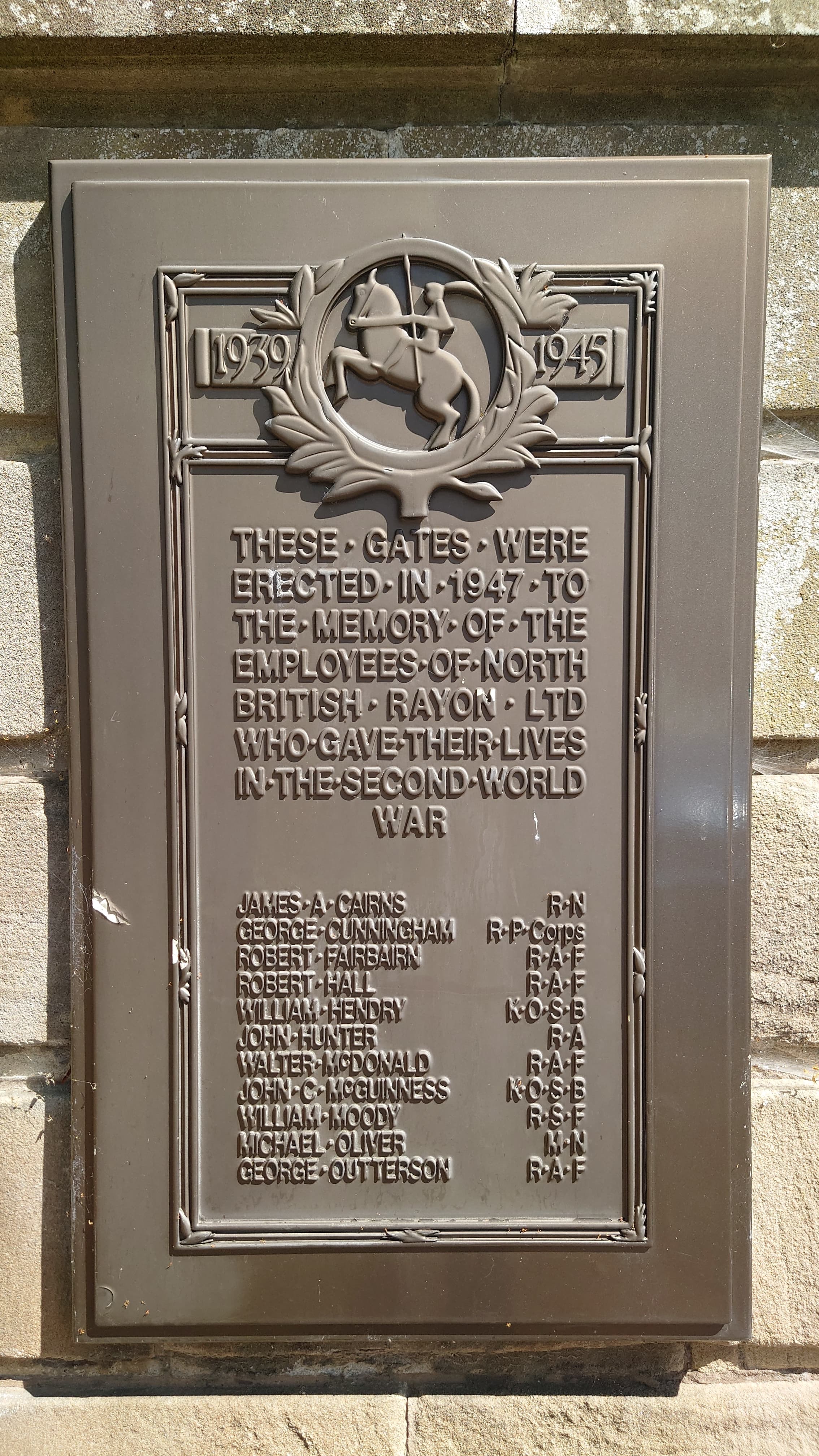
The North British Rayon memorial plaque in Jedburgh.
Perthshire with a guide's eye
Another July recce took me to Perthshire, around Crieff and Auchterarder.
That area is part of my own story. I went to school in Crieff, lived for a time in Auchterarder, played golf at Gleneagles and Muthill, played rugby in Crieff and studied the River Earn when I was younger.
This time I was returning with a guide's eye, looking at the practical demands of a possible multi-day assessment route.
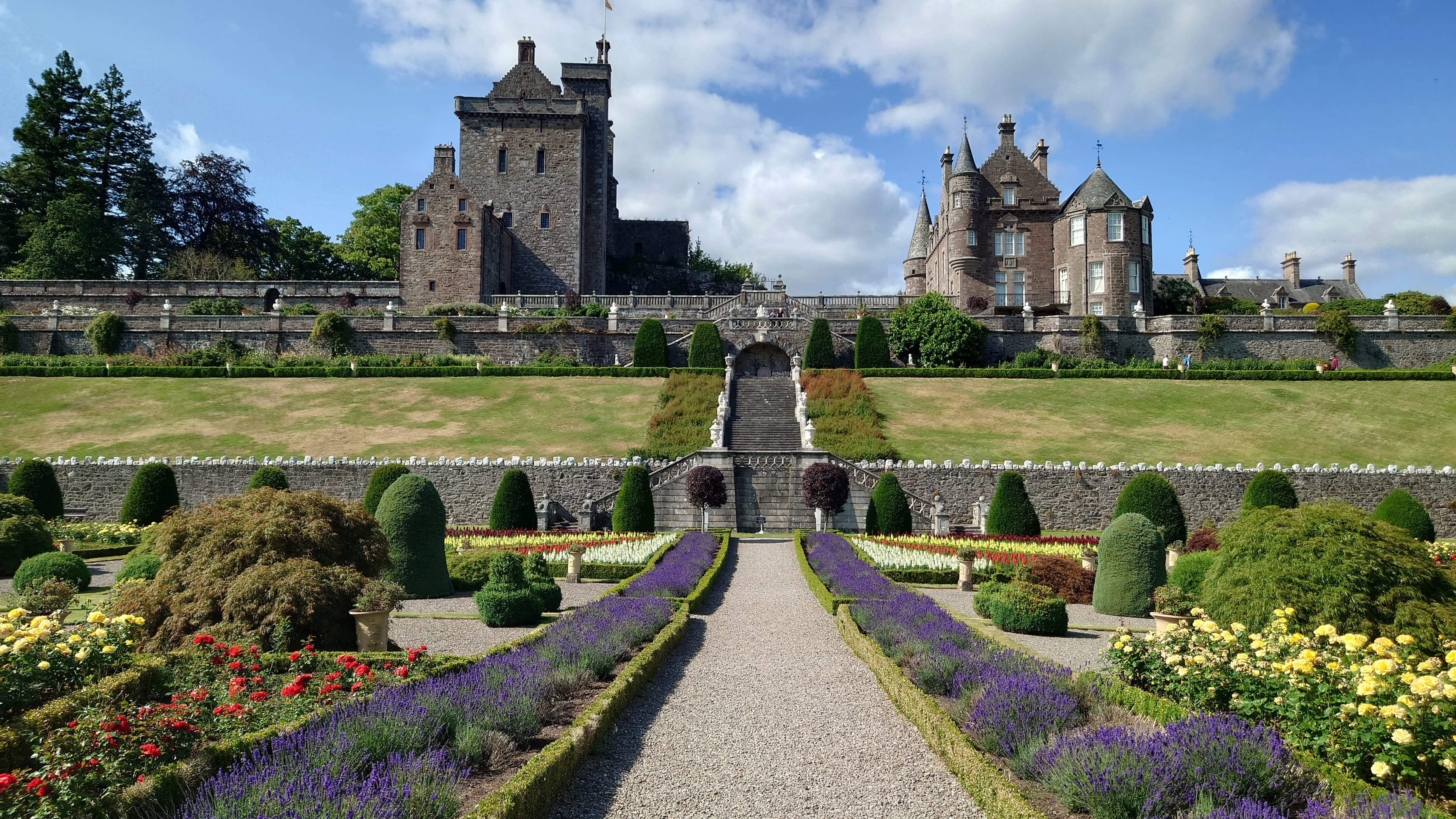
One of the most useful visits was Drummond Castle Gardens.
Historic Environment Scotland describes the designed landscape as containing Scotland's best example of formal terraced gardens. I had visited before, but this time I was thinking about coach access, walking flow, group movement, timing and interpretation.
The staff were generous with their time and insight. I left with a stronger sense of the gardens not only as a formal composition, but as a place that depends on continuing skill, work and care.
That preparation changes a future visit.
A guest may first notice the terraces, planting and views. A guide who has taken time to recce the place can also help them understand how the visit works, what deserves time and how the living management of the gardens sits alongside their history.
The point is not to display private knowledge or imply special access. It is to arrive prepared and interpret the public visit responsibly.
Leith, books and borrowed curiosity
Later in the month, I stopped at an independent coffee shop whose owner I have known since his days in Leith.
I spent more than a decade studying, living, working and eating in Leith. It is a part of Edinburgh that rewards time, especially when its maritime history and long relationship with the wider city begin to come into view.
July also brought an important addition to my shelves.
I was fortunate to acquire a collection of The Book of the Old Edinburgh Club, still carrying the previous owner's research bookmarks. There is something special in that: one person's curiosity becoming a route into another person's work.
A friend also gave me books that had belonged to her mother, a local historian. Among them was Blind Hary's The Wallace, a fifteenth-century narrative poem, along with old postcards reproducing views of Stirling and Abbey Craig before the National Wallace Monument was built. The Monument was completed and opened in 1869.
A second-hand book can be more than a source. It can carry a trace of someone else's attention.
That matters to me because Tartan Compass is being built around attention: to places, people, evidence, weather, memory and the details that can change the meaning of a day.
Building the public front door
Alongside the fieldwork, I have continued to improve the public side of Tartan Compass.
The website now gives my guiding work a clearer front door. The public channels give me somewhere to share places, observations and field material when there is something worth sharing.
I do not want to create noise simply to appear active.
The aim is to make the work visible without letting the publishing become more important than the guiding.
The work behind the guided day
A guided day is not only the hours spent with guests.
It begins with reading, walking, checking, listening, returning and asking better questions.
It can mean stopping at Carter Bar and seeing Scotland from a fresh direction. It can mean asking for help in Jedburgh and finding family memory in an industrial landscape. It can mean walking through a formal garden while thinking about access, timing and the people who maintain it. It can mean opening an old book and finding someone else's attention waiting inside.
Scotland is rich and complicated. It deserves more than a list of stops.
It deserves preparation, care and the willingness to look again.
That is what I am building Tartan Compass around.
Ducens et amans vitam per Scotiam
Guiding and loving life across Scotland