
The Changing Fields of Fife
Barley, oats and the harvest landscape in September
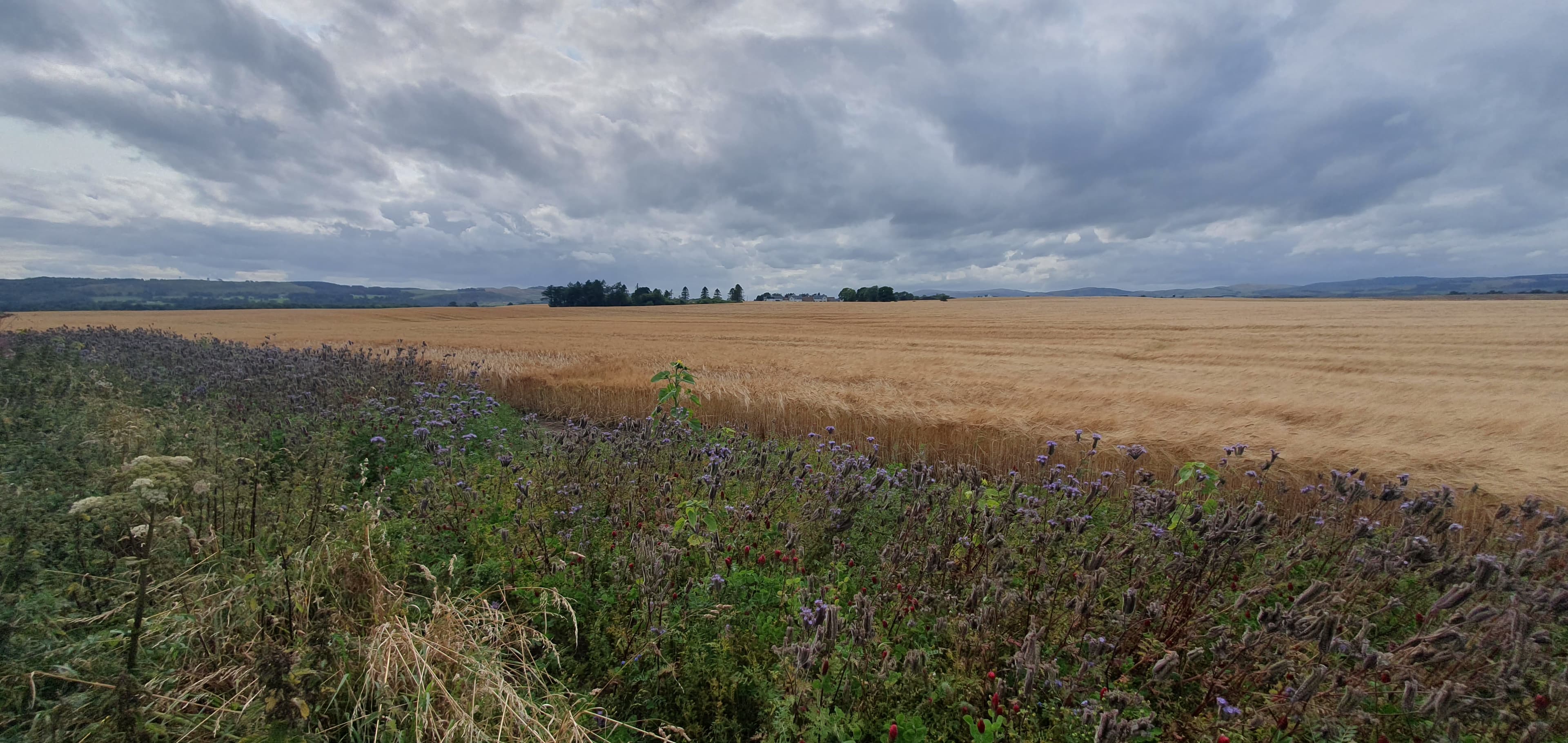
Fields near Loch Leven, Kinross-shire. Photograph: Ross McDowell.
After several journeys through Fife towards St Andrews this summer, I have started to notice how quickly the fields change.
Grain standing one week. Harvested fields the next. Straw gathered into bales across the stubble. Elsewhere, barley, wheat and oats are dancing in the wind.
When you travel the same road often enough, those changes help make every journey unique.
The more I have passed them this year, the less they have felt in the background.
A changing harvest
I have had the impression that parts of the yield look lighter than in recent seasons.
By late summer, agricultural reporting was describing a difficult and highly variable year after prolonged dry weather. Some crops and regions had fared better than others, and the picture was not simple enough to turn what I was seeing in Fife into a county-wide claim.
From sitting in the jump-seat on the coach in the summer, you only glance at what is the culmination of a long farming year.
The decisions made, the work started months earlier and the conditions embraced thereafter all contribute to a field that’s ready for harvest. It’s a complex process that can take generations to master, and external factors can make or break the success of a season.
The shape of the land
There is another feature of Fife that becomes noticeable when you cross it regularly: it’s the quilted effect of a managed countryside.
Large fields, straight boundaries, shelter belts, farm roads and steadings give parts of the landscape a colourful patchwork pattern.
Sir John Sinclair belongs to the wider Scottish story of agricultural improvement and the eighteenth-century appetite for measuring land, production and society. But no man from over 200 years ago is responsible for the landscape in view today.
This was made over generations through enclosure, estate management, tenant farming and changing practice.
At places such as Cambo and Balbirnie, records and surviving landscapes still give some sense of that longer process, and then the modern tractors and combine harvesters run their worked lines across it all.
Follow the barley
Barley remains Scotland's dominant cereal, and in Fife the route from field to whisky can be unusually short.
Daftmill, near Cupar, is a working family farm as well as a distillery. The farm grows malting barley and uses its own grain to make whisky.
What’s revealing is that the farming year sets the rhythm. The distillery operates during quieter periods on the farm, mainly through winter and again in June and July. When spring comes, the barley has to be sown, potatoes planted and cattle put out to grass. The stills go quiet again when harvest arrives.
The connection continues after distilling. The spent grain is used for cattle feed, while the pot ale and spent lees are returned to the grass or barley stubble as fertiliser. Even the warm water used to cool the stills is reused where possible.
Passing those fields around Cupar, it makes whisky feel less like something that begins at a distillery and more like one part of a working farm.
And the oats
A few miles away, another familiar Scottish food begins just as plainly.
Quaker's mill is at Cupar. The company works with farmers across Britain, many within a relatively short distance of the mill, and one of the Fife growers it profiles is at Gilston Mains, a mere six miles away.
Oats can move from a field in Fife to the mill at Cupar and from there into something as ordinary as a bowl of porridge, as filling as a white pudding, or as delightful as a cranachan dessert.
It is easy to talk about them all as tradition. I like it that they exist and thrive thanks to our Scottish farming traditions and roots.
Towards winter
By September, some fields are almost finished for the year while others are taking us into the next season.
Around Loch Leven, Channel Farm grows cereals alongside vegetables including carrots, leeks, cabbages, beetroot, kale, pumpkins, parsnips and turnips. Some of that produce goes directly into the farm shop and kitchens at Loch Leven's Larder.
The crop rotation shows itself well at this time of year with some being cleared and others quietly preparing to be our autumn and winter food.
Looking from the roadside
I have driven these roads many times, and the fields are forever changing.
Barley can take the conversation towards whisky. Oats can bring us to Cupar and breakfast. A shelter belt or a straight boundary can pull us back into older decisions about managing the land.
Being among it so often helps to appreciate the endeavours, challenge and accomplishment that our farmers realise every season. I enjoy simply having the opportunity to share those changes with others.
There’s always something new discovered too. I wonder what will be next?
A place understood. A story shared. A day that's made for you.