
Ballachulish Slate: Quarry, Craft and Community
Geograph / CC BY-SA 2.0
At Ballachulish, a Highland landscape became a building material, quarried beside Loch Leven and sent out to roof towns and cities far beyond the glen.
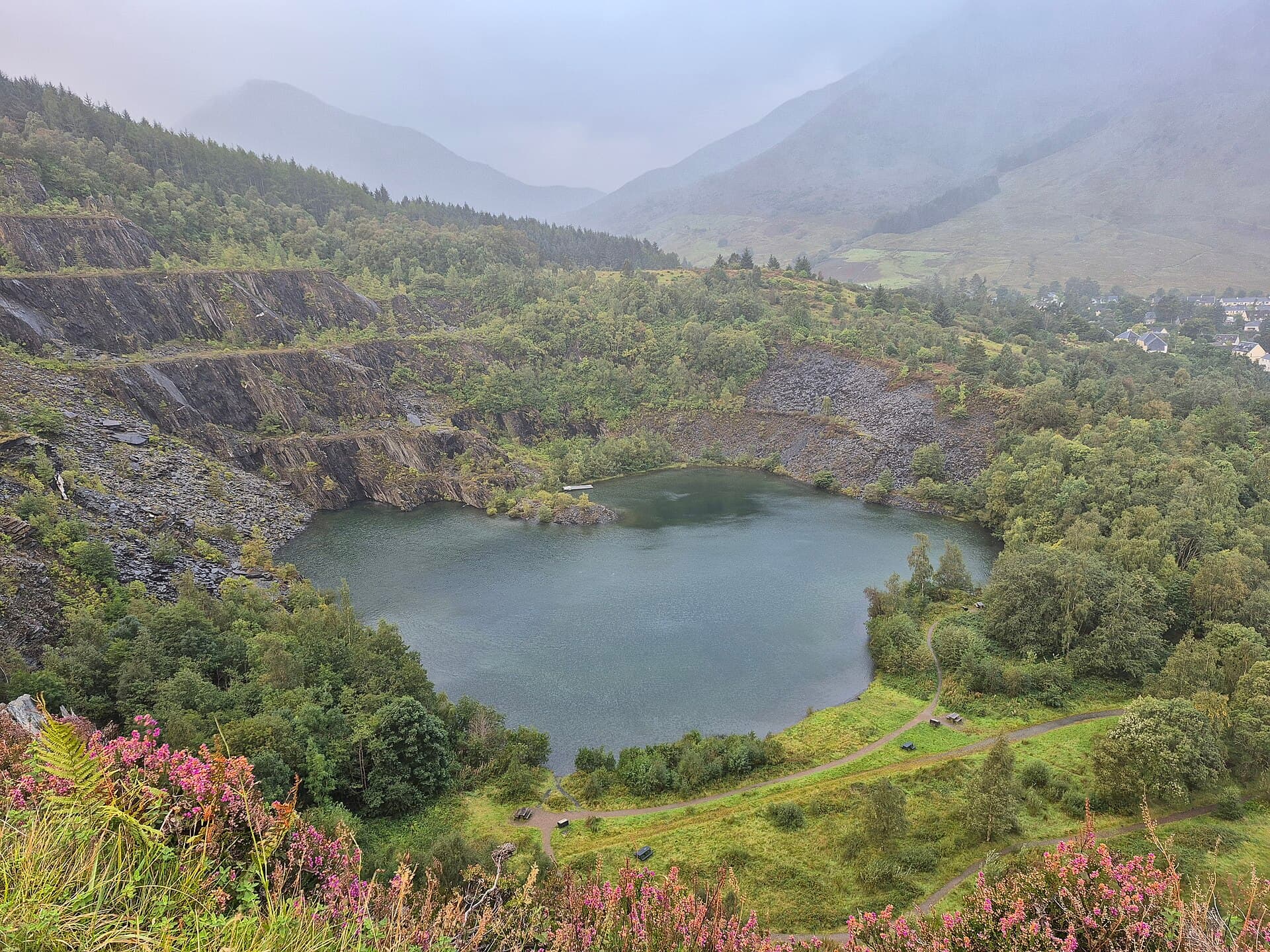
Slate quarrying began here around 1693 and continued until 1955. Ballachulish became Scotland's largest slate quarry, turning rock with a natural cleavage into durable roofing slate. Workers quarried, split, dressed and graded the stone, then moved it down towards Loch Leven for shipment. The surviving quarry, inclined plane and slate-built features around the village still allow that journey to be followed from geology to labour, transport and the built fabric of Scotland.
Start with the rock itself and the way slate splits, then follow the material outwards. Look at the terraced quarry, the surviving inclined plane, the slate used around the village and the route towards the loch. The story becomes much bigger when you stop seeing the quarry as an isolated industrial site and start asking where the stone went.
Ballachulish changes the way I look at the Glen Coe landscape. Here the rock is not only scenery or geology; it became a material that people quarried, split, moved and sent away to roof buildings elsewhere. I like being able to follow that journey from the lower quarry towards the village and loch. The quiet, flooded workings today make the contrast even stronger. For me, it is a very direct connection between Highland landscape, skilled labour and the built Scotland beyond it.
Ask about exploring this place or connecting it with others on a guided day in Scotland.
Shaping a private day around what interests you
Whether you are drawn to traditional crafts, industrial history, or dramatic Highland landscapes, Ross shapes private journeys around your interests and pace.
Get in touch