
Eildon Hills
Wikimedia Commons (CC BY-SA)
Above Melrose, the Eildons are not distant scenery. They are local hills people walk through, part of a Borders landscape shaped by paths, cycling, riding, farming and long human occupation.
The Eildons rise immediately above Melrose and remain part of ordinary outdoor life in the Borders. Walkers and runners use the hills, farms occupy the surrounding country, cyclists move through the Tweed valley and horses remain unusually visible within the cultural life of the region. The Common Ridings of the Scottish Borders give that relationship with horses and landscape a particularly distinctive expression. They connect modern communities with boundaries, memory and public tradition rather than treating the countryside merely as somewhere to visit. Underneath that contemporary activity lies an exceptionally long human history. Prehistoric occupation, a major hillfort and Roman activity show that these heights have been watched, used and interpreted for thousands of years.
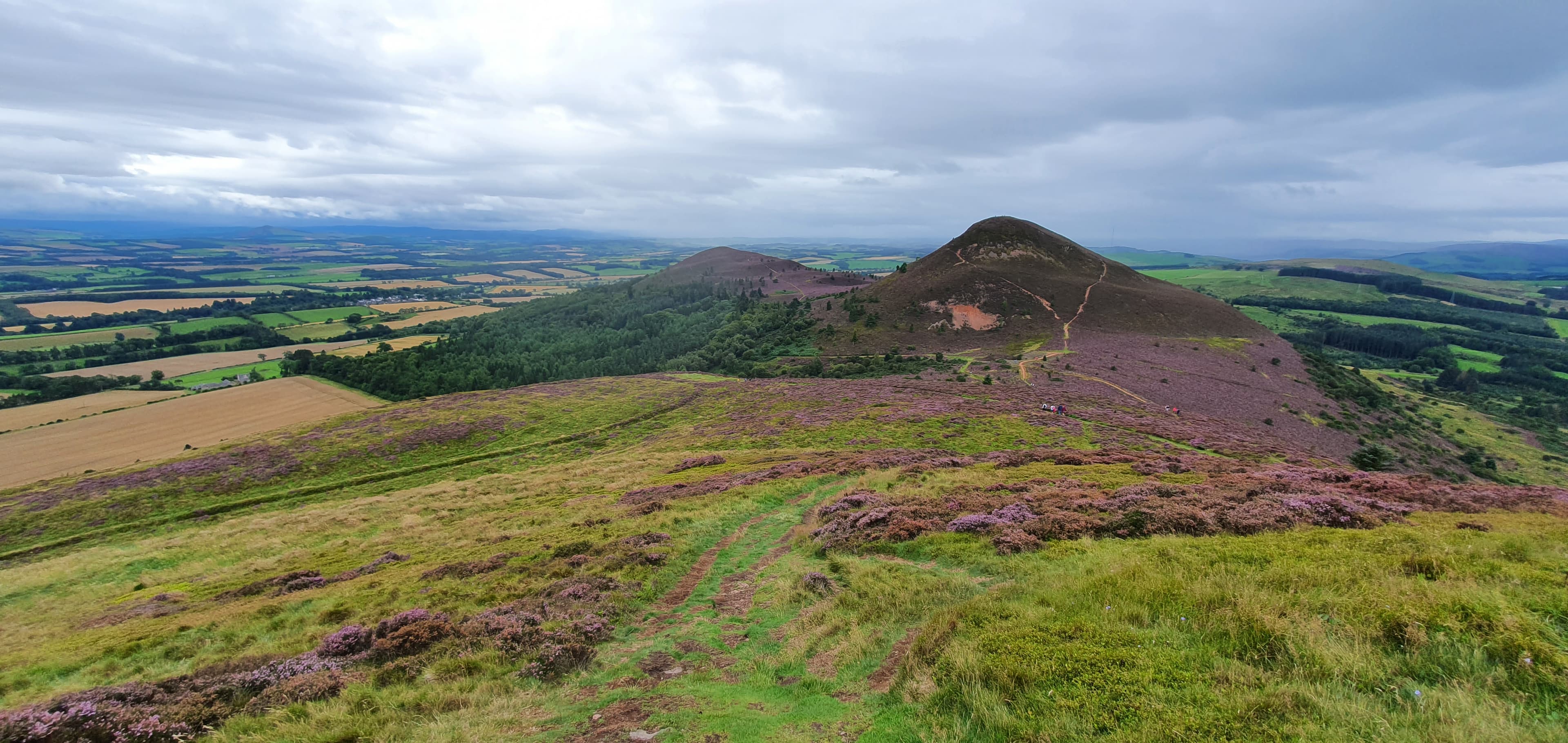
From the valley, notice how persistently the three hill forms dominate the country around Melrose. From higher ground the relationship reverses. Town, river, farmland, roads and woods spread out below, making it clear that the Eildons belong to a settled Borders landscape.
I tend to pick out the Eildons long before I reach Melrose. Those three hills are such a recognisable Borders landmark. Late summer is probably when I like them best, when the purple heather brings them out against the skyline. They aren't huge mountains, but they have real presence.
Ask about exploring this place or connecting it with others on a guided day in Scotland.
Shaping a private day around what interests you
Whether you are drawn to traditional crafts, industrial history, or dramatic Highland landscapes, Ross shapes private journeys around your interests and pace.
Get in touch