
Falls of Clyde
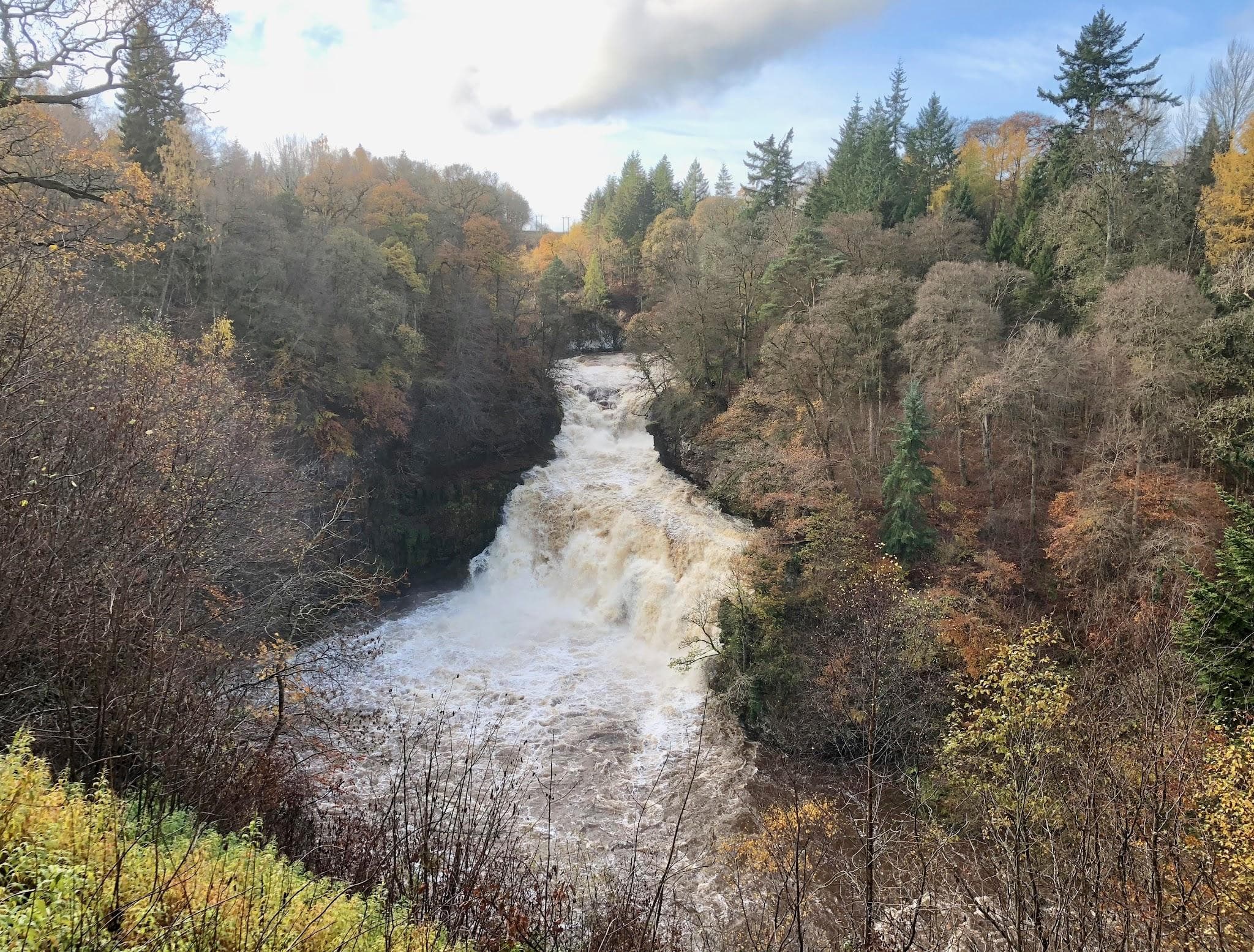
Photography: dave souza / Wikimedia Commons (CC BY-SA 4.0)
At the Falls of Clyde, the river is still doing work: drawing walkers through the gorge, carrying wildlife and generating electricity beside the mills of New Lanark.
The Clyde changes character dramatically beside New Lanark, moving from relatively quiet water into wooded gorge and a succession of falls including Dundaff Linn, Corra Linn and Bonnington Linn. People continue to move through this landscape for recreation, but the river itself is still working. David Dale harnessed its water for the New Lanark mills in the eighteenth century, while hydro-electric generation added another use in the twentieth. Electricity continues to be generated here. Woodland, recreation, industrial history and modern energy therefore occupy the same river corridor. New Lanark provides an important human context, but the Highlight remains the Clyde itself and the landscape its water has created.
Look at how quickly the river changes. Calm stretches, steep woodland, exposed rock and powerful falls can belong to the same relatively short section of the Clyde. Then look for the human interventions. Weirs, pipes and hydro-electric infrastructure show that this is not simply a river admired from a viewpoint. Its energy has been used repeatedly.
At the Falls of Clyde, you can see the power of the water before anybody has to explain how people learned to use it. That is what I enjoy about the place. Wooded gorge and crashing water sit almost alongside mills and industry. The relationship between landscape and what people were able to do with it becomes very easy to understand.
Ask about exploring this place or connecting it with others on a guided day in Scotland.
Shaping a private day around what interests you
Whether you are drawn to traditional crafts, industrial history, or dramatic Highland landscapes, Ross shapes private journeys around your interests and pace.
Get in touch