
Ross McDowell / Tartan Compass
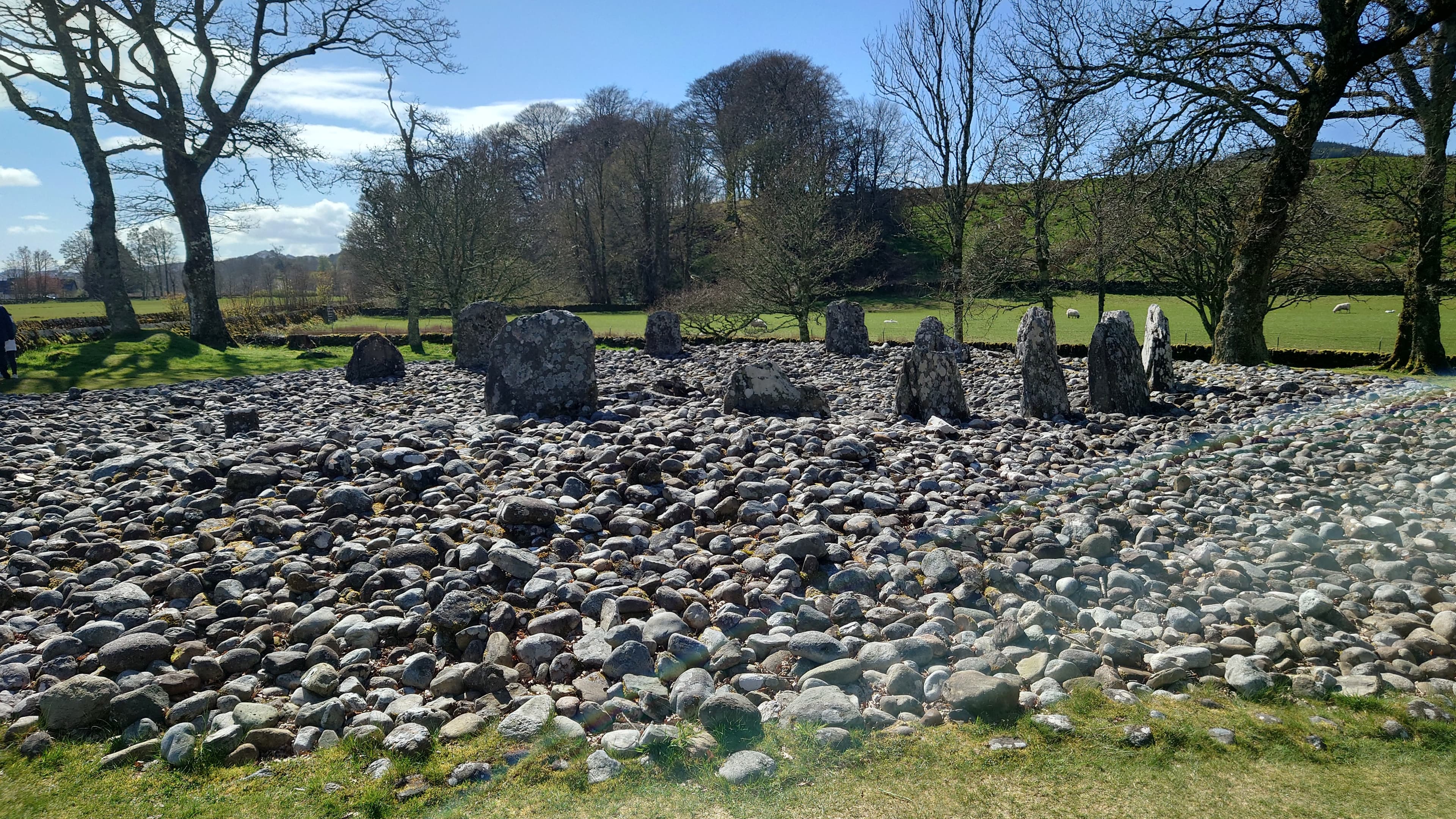
Kilmartin is a living glen where thousands of years of human activity remain visible among farmland, homes and the landscape people use today.
More than 800 monuments survive within six miles of Kilmartin Museum, representing around 12,000 years of human activity. What makes the glen especially rewarding is the way those sites remain embedded in the landscape rather than separated from it as individual exhibits. Cairns, standing stones, rock art and later centres of power occupy the same country as farms, roads, woodland and present-day communities. Archaeology is still developing too. Recent fieldwork has involved archaeologists, students and volunteers investigating rock art and other sites, with new discoveries continuing to change how the landscape is understood. Kilmartin is therefore not a prehistoric landscape frozen in time. People are still living in it, researching it and deciding how its extraordinary physical record should be understood and cared for.
Look between the monuments. The relationship between cairns, standing stones, surrounding hills and other sites can be as revealing as any individual stone. Avoid assuming that every alignment or placement has one certain explanation. Part of the interest lies in asking why particular places were repeatedly chosen. Then look at the modern landscape around them. Fields, roads, houses and working land make it clear that Kilmartin's human story never simply stopped.
Kilmartin is one of the places where I really notice the difference interpretation can make. So much of the story is present in the landscape without immediately announcing what it is or why it is there. Once those relationships begin to make sense, it stops being a series of isolated monuments and starts becoming a landscape shaped by people over thousands of years. It brings it to life.
Ask about exploring this place or connecting it with others on a guided day in Scotland.
Shaping a private day around what interests you
Whether you are drawn to traditional crafts, industrial history, or dramatic Highland landscapes, Ross shapes private journeys around your interests and pace.
Get in touch