
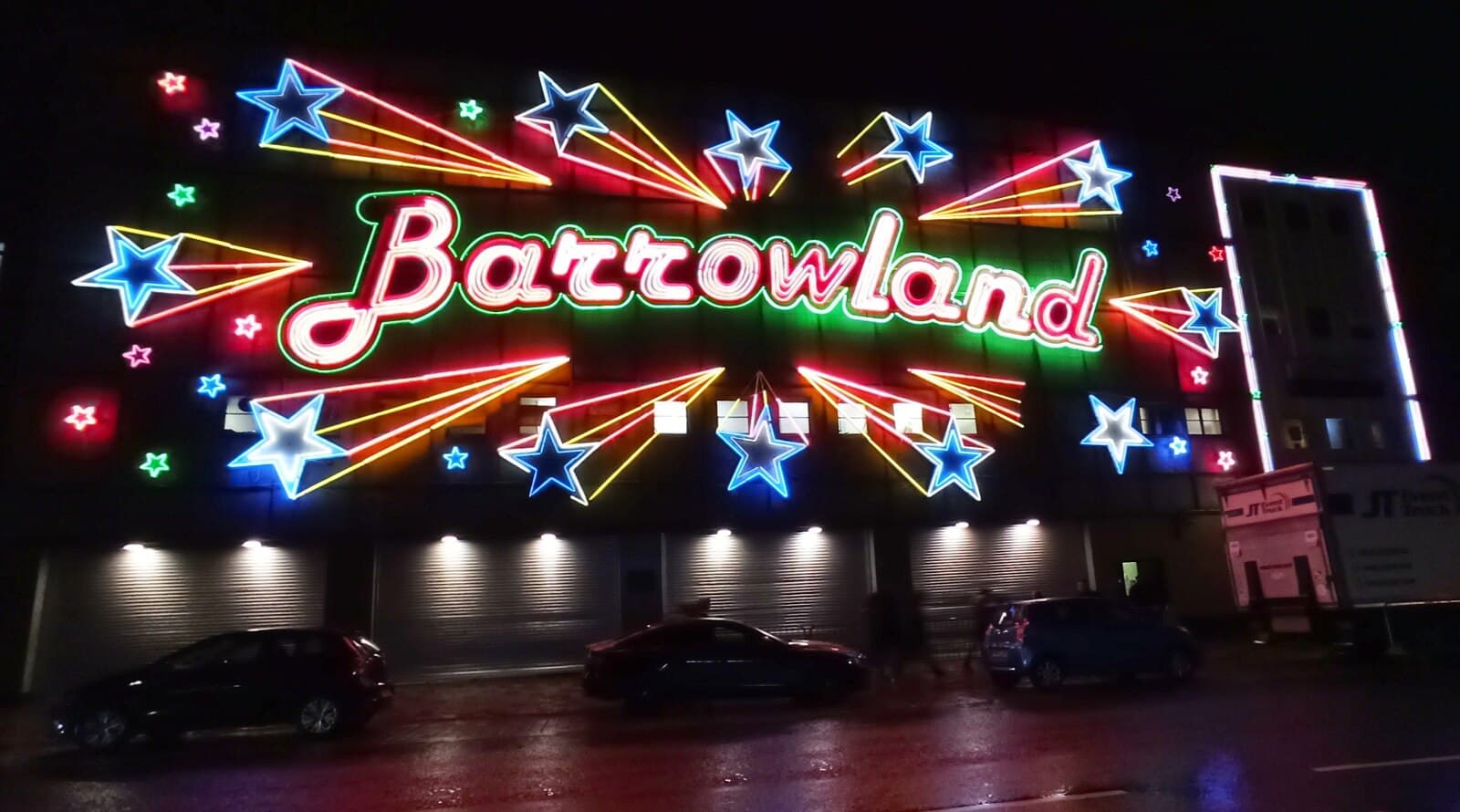
Thomas Nugent / CC BY-SA 2.0
At the Barras and Barrowland, Glasgow's market culture and music history occupy the same few East End streets.
Most people now think of the Barras and Barrowland because of music, gigs and the atmosphere of a great night out, but what interests me is that the story starts with street trading and Margaret 'Maggie' McIver. That gives the ballroom a very Glasgow continuity: a place created around a market community that found another life through music. I would probably still go there first for a gig, but the trading story makes the place better.
The Barras grew from the work of Margaret McIver and other barrow traders in the early twentieth century. McIver later created a ballroom for the market community, opening the original Barrowland Ballroom in 1934. The ballroom began as a place for dancing and social events before finding another life as a live-music venue with an international reputation. Trading, dancing, gigs and East End street life have all changed around one another without the place losing its recognisable personality.
The famous neon sign belongs to a building whose history is inseparable from the market beside it. Around the Barras, small units, signs, shutters, yards and newer uses make adaptation visible in the commercial landscape. Inside the ballroom, the sprung floor and compact relationship between stage and audience help explain why performers and crowds talk about the room with unusual affection.
Explore Glasgow with a private guide
Use The Barras & Barrowland as an interest or focus for a private day in Glasgow. Choose between a half-day or a full day—without a fixed route or rigid tour.
Shaping a private day around what interests you
Whether you are drawn to traditional crafts, industrial history, or dramatic Highland landscapes, Ross shapes private journeys around your interests and pace.
Get in touch