
Culross Palace & Royal Burgh
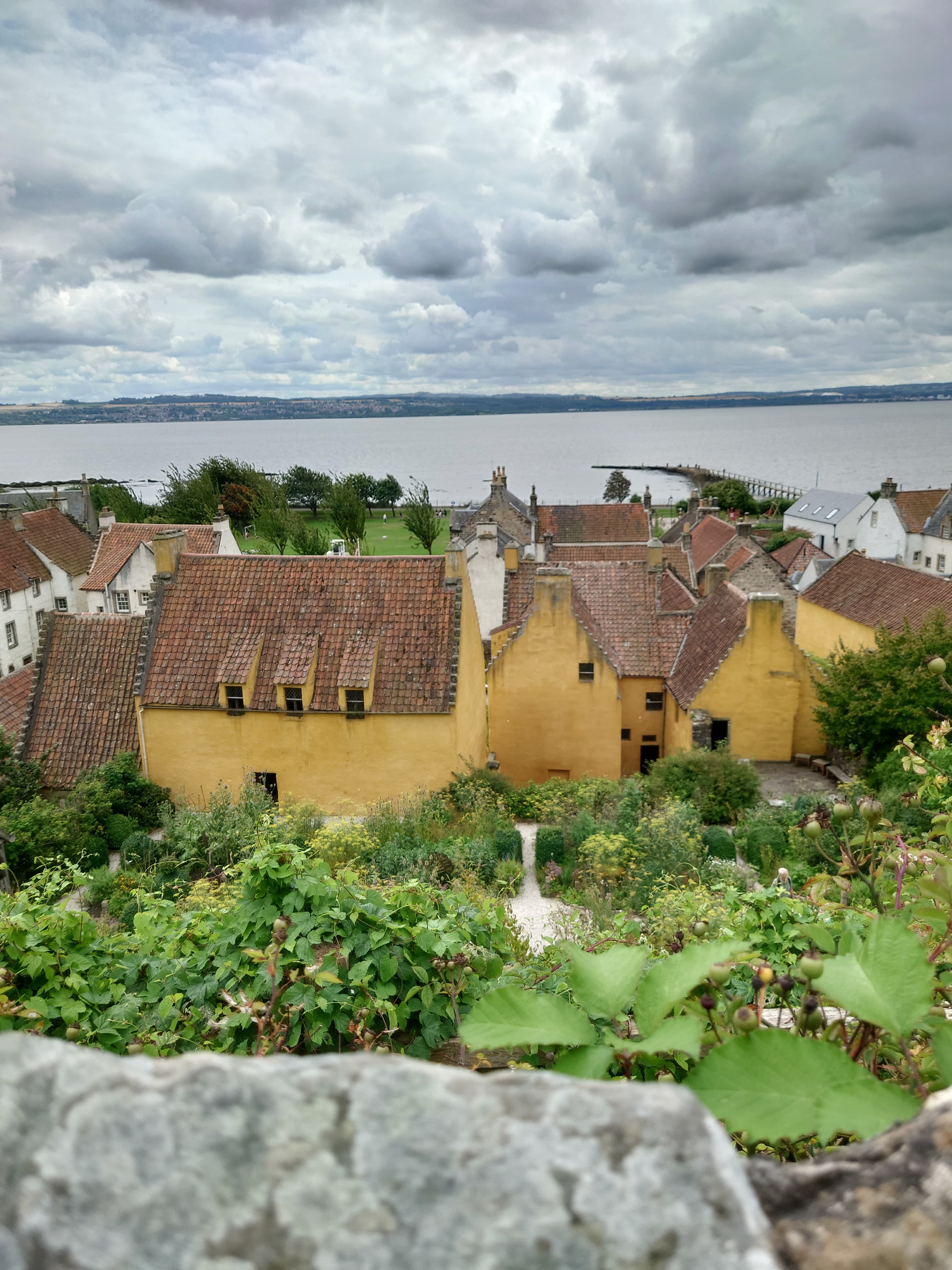
Photography: Ross McDowell
Culross Palace has a rather grand name for a merchant's house. With its painted walls, crow-stepped gables and narrow streets, it belongs to a town that once prospered through trade, coal and salt.
Culross became an important commercial centre on the Firth of Forth during the sixteenth and seventeenth centuries. Its prominent resident Sir George Bruce was a merchant and industrialist whose enterprises generated considerable wealth. He developed the house now known as Culross Palace in stages, with building work recorded in 1597 and 1611. Despite its name, the Palace was never a royal residence. It displayed merchant success when coal mining, salt production and maritime trade connected Culross with a wider world. The streets preserve something of the homes, workplaces and surroundings of the old burgh.
Steep roofs, crow-stepped gables, painted surfaces and projecting dormer windows give Culross an architectural character quite unlike Georgian Edinburgh or Glasgow. Inside the Palace, surviving decorative schemes suggest the tastes of a wealthy household. Outside, irregular streets, closes and changes in ground level retain much of the older burgh's character.
Ask about exploring this place or connecting it with others on a guided day in Scotland.
Shaping a private day around what interests you
Whether you are drawn to traditional crafts, industrial history, or dramatic Highland landscapes, Ross shapes private journeys around your interests and pace.
Get in touch